
The Chromebook comes of age
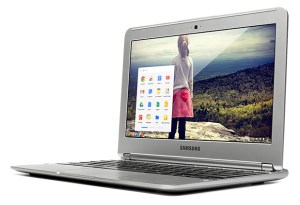 Google’s Chromebook programme has suffered since its initial launch, with prices higher and utility lower than the average netbook, not to forget early limitations of the OS. Now, with the launch of a new Samsung Chromebook, the Chromebook seems to finally be coming into its own.
Since the launch of Google Drive earlier this year, the relatively low capacity of the solid state drives (SSDs) supplied in these kinds of machines has become less problematic. This time around, you get 100GB of Google Drive storage for two years to supplement the 16GB included storage (and worth $120 on its own). That’s plenty of space to store everything essential, plus a bit of media to keep you going while you’re away from an internet connection. Updates to the Chrome OS also mean that you can achieve more away from the web (most notably offline Google Docs support), though this remains a cloud-centric computing experience.
The price has come down too, and, at £229 in the UK, finally comes in under what I always thought of as the traditional price point for netbooks (£250-£300). The drop in price is most likely attributable to the switch from Intel Atom processors to an ARM-based chip. Considering what Motorola was trying to achieve with last year’s ill-fated Webtop and the power available in today’s smartphones running on similar architecture, this kind of processing technology is now likely at a point where the Chromebook should make a pretty reasonable on-the-go productivity tool.
The screen is 11.6″, with a resolution of 1366×768, while there’s an HDMI port, 2GB of RAM and two USB ports (1x USB 3.0, the other 2.0). All this has been shrunk into a body that is 0.8″ thick and weighs less than 1.2kg. It’s not exactly a powerhouse, but the Samsung Exynos 5 processor in there is capable and runs at a low enough energy that it doesn’t need a fan, so battery life is good too.
If most of what you do on your computer consists of using the browser and productivity software and you could do with a smaller, cheaper computer to tote around with you, now may finally be the time to get a Chromebook. The Asus netbook that I’ve had for the last three years has now decided that it is always going to treat the ‘shift’ key as being on, so if I decide that I can justify replacing it, the Chromebook is going to be the first place that I’m going to look. The synchronisation of everything between my Android phone, tablet and main laptop all running Chrome will only make the experience all the more cohesive.
What do you think of the Chromebook? Is the low-powered, ultra-portable computer still relevant in a world where tablets exist? Let me know your thoughts in the comments section.
Find out more about the new Chromebook here.

 AlphaQuirky